
Nebraska Court Docket Searches
Begin at the Nebraska Judicial Branch eServices case-information page. From there, trial-court searches run through JUSTICE, the system Nebraska uses to manage County, District, and Separate Juvenile Court records. Type a name or a case number and you get pointers toward matching cases. Treat the result as an index, nothing more. The complete Nebraska Register of Actions stays with the court where the case began. The original file, paper or electronic, stays there too. Search the statewide index first. Then, when you need an older filing, a certified copy, or a live answer about a hearing, call that Nebraska court's clerk.
- Open the Nebraska Judicial Branch case-information page and choose the JUSTICE trial-court search that fits the task.
- Choose Individual or Entity, enter the name in the format shown by the search form, and add a county, court type, case year, or case type only when it helps narrow the results.
- Compare the caption and court with what you know. Open the case detail to see the Register of Actions, case schedule, financial information, and any available document images.
- For a Nebraska appellate case, switch to SCCALES. For a federal case filed in Nebraska, use the federal court's PACER or CM/ECF route instead of JUSTICE.
- Use the Nebraska county directory to reach the clerk that holds the trial file when an image is missing, the record is old or restricted, or you need a certified copy.
Nebraska Search Access Paths
Nebraska offers several routes into its case information, and the right one depends on how often you search. Anyone can query JUSTICE through Nebraska.gov from home. Prefer to skip the fees entirely? Courthouse terminals and certain libraries offer free public access. The Nebraska Judicial Branch points users to the State Library, the UNL and Creighton law libraries, and JUSTICE for All terminals in public libraries across the judicial districts. Hours and setup vary by location. Confirm the details on the current court information page before you drive anywhere. For recurring case work, the subscriber service earns its cost. The one-time search suits a single name lookup. Neither paid option unlocks anything special. Sealed files, juvenile records, and other restricted material stay off-limits, and certified copies or unscanned paper always loop back through the clerk. Free access shines when one docket search does not justify a remote charge. A terminal shows the same public view Nebraska's official system offers, nothing wider. Match the tool to the task. A one-time name query carries a flat charge, while subscriber case details bill per case. Ready to move from the screen to the file? The Nebraska County Court contact directory links the statewide index to each local clerk's office.
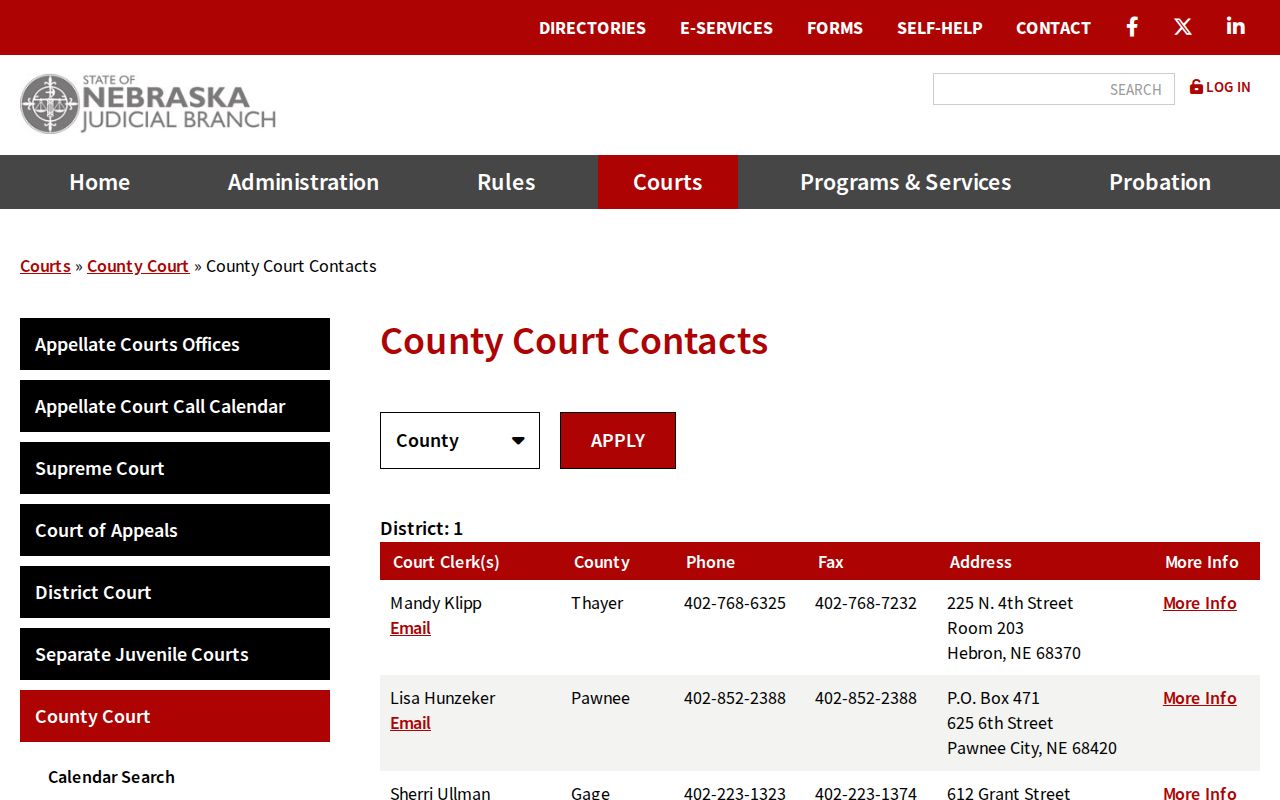
Treat that directory as a phone book, not a second database. A Nebraska case file stays with the court that opened it.
Note: A Nebraska public terminal can remove the remote search charge, but it does not change the court's rules for restricted records.
The Statewide Case Search in Nebraska
Nebraska runs one shared JUSTICE index rather than a patchwork of county portals. The trial search reaches courts in all 93 Nebraska counties. A result can include case summaries, party names and roles, criminal offense details, costs and payments, a Register of Actions, and judge notes where available. No result promises full coverage. Not every filing is scanned. Not every field is public. Most eligible documents filed or uploaded after April 16, 2008 may carry image links; older paper records, unscanned documents, and restricted material may still need a clerk's search. Every county sits inside the trial index. That still does not make every Nebraska court view complete. The public Multi-Court Case Calendar skips some District Court counties, and a county clerk may hold paper or local archive material that never went online. The Nebraska court structure page shows how the index, the calendars, and local files fit together. What if a search comes back empty? Change one variable at a time. Toggle Individual versus Entity and confirm spelling and name order. Then drop optional filters. Verify the likely county and court level before you widen the year or case type. JUSTICE result lists refresh nightly, generally within about 24 hours. A brand-new filing may lag. Hearing dates raise a separate issue. The Multi-Court calendar shows only selected settings. Its District Court view omits 13 counties. Those gaps say nothing about the trial index itself. For a fresh filing, an old paper file, or a restricted case, ask the originating Nebraska clerk which access route applies.
JUSTICE Search Fields
The official JUSTICE preview offers more than a simple name box. Its search fields can shrink a huge result set fast. Several menus load their choices dynamically. The static help page does not document every option. Do not read too much into a blank list. An empty dropdown proves nothing. It does not mean a Nebraska court or case type is missing.
| Field | Use | What to Know |
|---|---|---|
| Party Name | Person or business | Individual and Entity are separate choices; the official help gives name-order guidance. |
| County / Court Type | Narrow the trial court | County choices cover all 93; the preview shows County and District Court. |
| Case Year / Type | Limit the search | Subtype choices depend on case type; the complete dynamic menus are not published. |
| Judge / Attorney | Optional filters | Lists load dynamically and can accept more than one selection. |
| Sort / Client Memo | Order or label a query | Sort choices are not fully shown; Client Memo is billing text, not a court filter. |
Note: Nebraska's live JUSTICE form may show more filter options than the static preview, so an empty preview menu does not mean a court is missing.
Nebraska Courts and Their Dockets
Every Nebraska county has one District Court and one County Court. Trial courts sit in 12 judicial districts at each level. County Court takes traffic matters, most misdemeanors, probate, small claims, and preliminary felony proceedings. District Court holds the felony trials. It also hears larger civil cases and domestic relations. Many appeals from County Court land there too. Nebraska's Separate Juvenile Courts serve just three counties. In the rest of the state, juvenile jurisdiction generally sits in County Court. No town or city runs its own municipal-court tier in the state system.
| Court | Docket Covers | Where to Search |
|---|---|---|
| District Court | Felony trials, major civil cases, domestic relations, and county-court appeals | JUSTICE and the local District Court Clerk |
| County Court | Traffic, misdemeanors, small claims, probate, and preliminary felony hearings | JUSTICE and the local County Court Clerk or Clerk Magistrate |
| Separate Juvenile Court | Juvenile matters in the three counties with a separate court | JUSTICE where permitted and the juvenile court clerk |
| Nebraska Court of Appeals / Supreme Court | State appeals and matters within appellate jurisdiction | SCCALES and the appellate clerk |
Dollar limits show where a Nebraska civil case belongs. From July 1, 2025 through June 30, 2030, County Court holds concurrent civil jurisdiction up to $70,000. Small claims carries its own $7,500 cap. Anything bigger belongs in District Court. A felony can leave docket entries at both levels: County Court handles the preliminary proceedings, and a bindover sends the prosecution to District Court. Follow that path with care. Match the court, the case number, and any transfer entry before assuming you have the whole story. The later hearings may appear only on the Nebraska District Court docket.
Note: A Nebraska felony bindover can create a second docket, so check the transfer entry and later District Court number.
Nebraska Appeals Need Another Search
An appeal does not erase the trial case. The originating Nebraska court keeps its docket, including the notice of appeal and the record-preparation events. The appeal itself lives elsewhere. The Nebraska Supreme Court and Court of Appeals use SCCALES, a separate appellate system, for the appeal's own case summary, Register of Actions, briefing, and disposition. A trial number helps you locate the appeal. But the appellate matter has its own entry and its own schedule. Search published opinions in the free Appellate Courts Online Library. An opinion library is not a full case docket.
Nebraska's state court structure has a federal boundary too. A case filed in the U.S. District Court for the District of Nebraska never appears in JUSTICE. That court's official website points to its federal case services.
The District of Nebraska page shows the federal docket route.
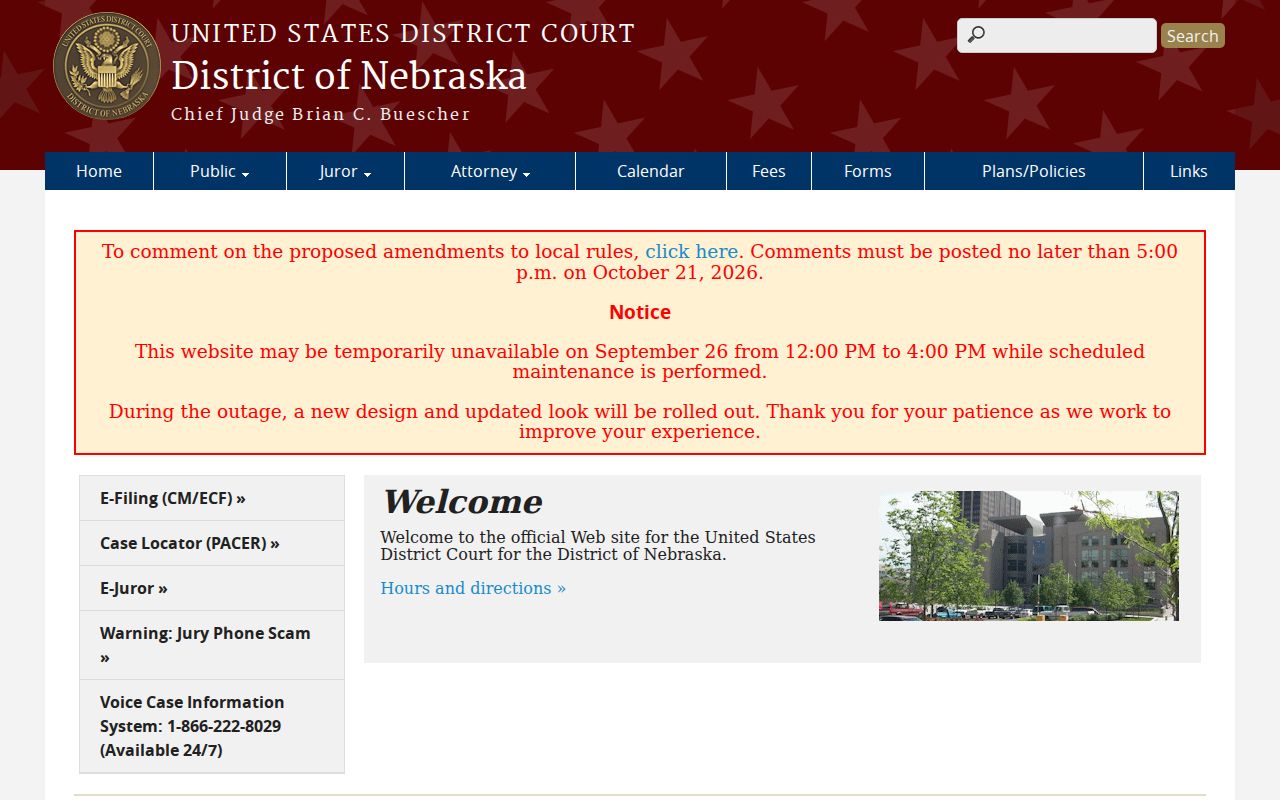
A federal caption may name the United States or cite federal law. That page helps there. A state trial record still belongs in JUSTICE or with the county clerk. Federal filings can carry a separate access charge. Review the PACER pricing page before opening federal documents. It spells out how those fees work.
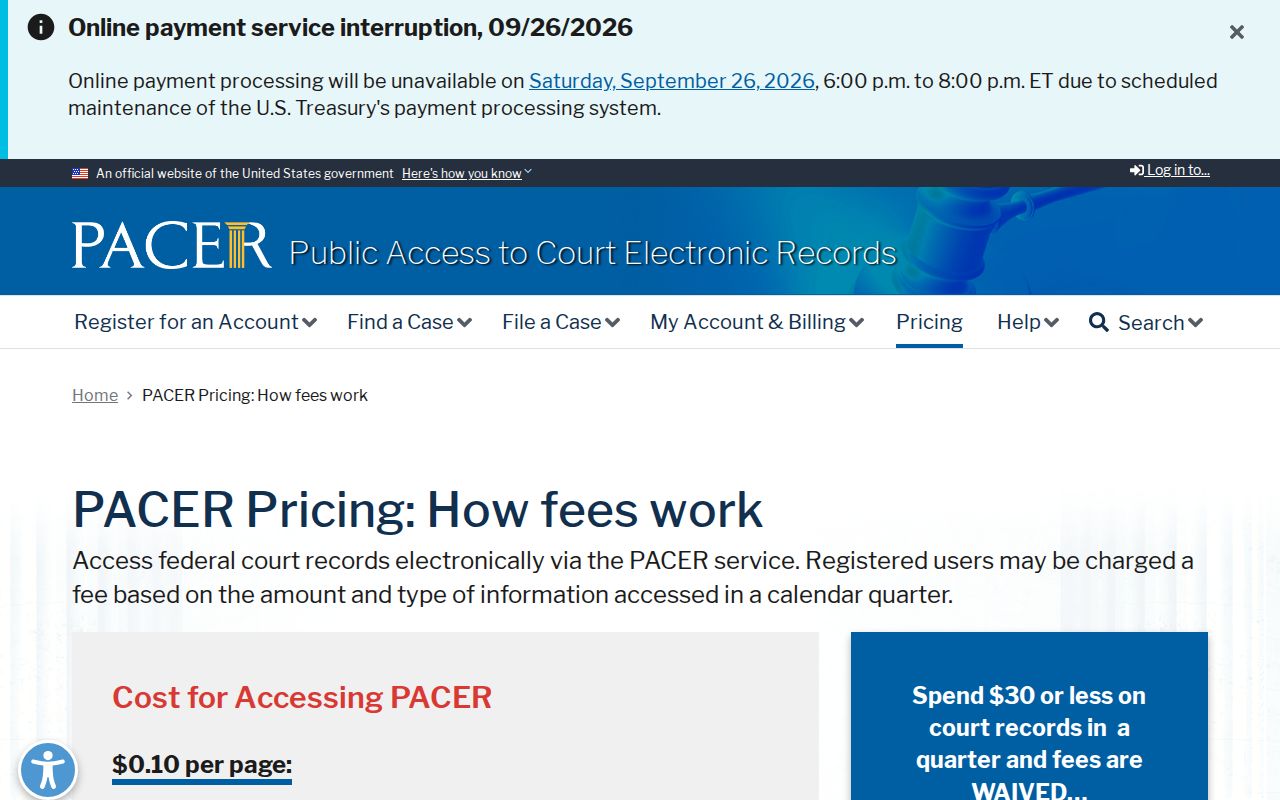
PACER's federal fees do not set Nebraska JUSTICE prices.
Inside a Nebraska Court Docket
A Nebraska case page gathers several kinds of detail. The Register of Actions is the dated event list, not the filed order itself. Around it, the page may show parties, the schedule, financial activity, and judgment or offense information. The tabs vary by case and access level. A blank one does not mean no record exists.
| Case Number | Trial numbers use a court prefix, two-digit county code, case-type letters, year, and sequence, for example C## CR-YY-######. This is a pattern, not a live case. |
|---|---|
| Parties | Case summary and parties/attorneys tabs identify the case caption and roles when public. |
| Register of Actions | Dated filings, hearings, and entered orders form a chronology of case events. |
| Hearing Settings | Case Schedule Information can show case-linked settings; confirm a current date with the court. |
| Financial Activity | Costs, fines, judgments assessed, and payments may appear. The clerk's receipt remains the payment proof. |
| Disposition | A summary entry records an outcome; read the signed judgment, order, or dismissal for its full terms. |
Nebraska Docket Terms in Plain English
Many labels on a Nebraska docket name an event. They do not name the full legal paper behind it. A short entry can hide a lot. Read each case entry with its date and its document link. When the label still leaves you guessing, ask the Nebraska clerk for the actual order.
- Register of Actions
- The dated list of filed papers, hearings, and entered orders in a case.
- Bindover
- A felony case moves from preliminary County Court proceedings to the District Court stage.
- Continuance or reset
- A hearing moves to a later date; check the newest setting or notice.
- Disposition
- A recorded outcome for a claim or charge. The signed order gives the complete terms.
- Case Schedule Information
- A JUSTICE tab for hearing and proceeding settings, when shown for that case.
Note: A Nebraska Register of Actions records events, while the signed order supplies the court's full direction and terms.
Docket Access Laws in Nebraska
Nebraska has two layers of records law. The Nebraska Public Records Act covers government records and sets a response path. It cannot lift a seal. Nor can it override juvenile privacy or case-file rules. Article 8 of the Nebraska Court Rules governs court-record access through JUSTICE and SCCALES, clerk inspection, and certain compiled-data requests. Those rules fill the gaps. When a general request and a case-specific access rule seem to overlap, ask the Nebraska court that holds the record.
Key Rules:
Nebraska Court Rules, Article 8 sets public remote access, clerk access, compiled-data requests, and exclusions for sealed or protected records.
Neb. Rev. Stat. §§84-712 through 84-712.09 provides the general public-record request and response framework, subject to other laws and court rules.
Neb. Rev. Stat. §43-2,108 limits access to confidential juvenile case information.
Neb. Rev. Stat. §43-113 protects adoption records from ordinary public inspection.
Note: Nebraska's general public-records law does not displace the court rule or statute that restricts a case record.
Nebraska eFiling and the Public Record
eFiling is the filing side of Nebraska's court workflow. Attorneys submit new cases and papers through a registered account. Court staff then process them in the case-management system. Mandatory attorney eFiling and eService arrived in Nebraska trial and appellate courts on January 1, 2022, subject to rule exceptions. A filing login is not a public docket search. Keep the two separate. Submitting a paper does not make it public when a rule or order restricts it.
The path is simple to picture: Nebraska County filing → Nebraska clerk review → event in the local court system → public Nebraska JUSTICE view after the nightly refresh, if the case and document are open for public access. A public image link may be absent even when the event appears in the Register of Actions. That can reflect image availability, an older paper file, or a privacy limit. Nebraska's local clerk remains the source for the official record and a certified copy.
Nebraska Court Search Costs
Nebraska's online access prices changed on January 1, 2026. The Nebraska Supreme Court fee announcement explains the new structure. The current case-information page lists the search charges. The figures cover the stated search products only, not every county copy, court filing, transcript, or payment service.
| Access route | Published charge | Scope |
|---|---|---|
| JUSTICE one-time name search | $17 | Up to 30 results, available for three calendar days. |
| Subscriber account | $100 per year | Up to ten users; general result lists are free. |
| Open a trial case detail | $2 | Document images add no separate image charge. |
| Nebraska County Court copy | $.25 per page; $1 seal for a certified copy | Statutory copy basis; confirm mailing or local handling costs with the clerk. |
Nebraska's trial courts move a lot of paper. The Judicial Branch keeps count. It reports 294,275 adult County Court filings and 36,170 District Court filings in FY2025. The FY2025 annual report counts filings and cases, not unique people or pending backlog. Free online access exists too. The JUSTICE for All library expansion and courthouse terminals are worth checking. For copies, the Nebraska clerk quotes the exact record and delivery cost.
Note: Nebraska's online search fees are separate from filing charges, copy costs, certified seals, and any local delivery expense.
Nebraska Court Dockets by County
The statewide index helps you locate a Nebraska case. The docket sheet stays with the court where the case began. The complete court file does too. Match the county named on a notice or case result. Its local clerk holds the detail. Six counties rank largest by population in the 2020 Census. Their court settings differ across Nebraska. Each county note gives a court seat and one useful system detail. That is no substitute for the current clerk directory.
Douglas County
Omaha · largest judicial-district filing volume and a separate Juvenile Court
Lancaster County
Lincoln · second-largest population and a separate Juvenile Court
Sarpy County
Papillion · third-largest population, with its own Juvenile Court
Hall County
Grand Island · central Nebraska County and District Court hub
Buffalo County
Kearney · regional court hub in District 9
Dodge County
Fremont · County and District Court records remain in the statewide index
Every one of the 93 Nebraska counties has its own docket site here. Open the directory of all 93 Nebraska counties to find a county's court seat and its local court records.